Last Bee
Approach
The course brief required us to use VR. We wanted an experience where caring is the mechanic, and where the player feels the loss of an ecosystem before they feel its recovery.
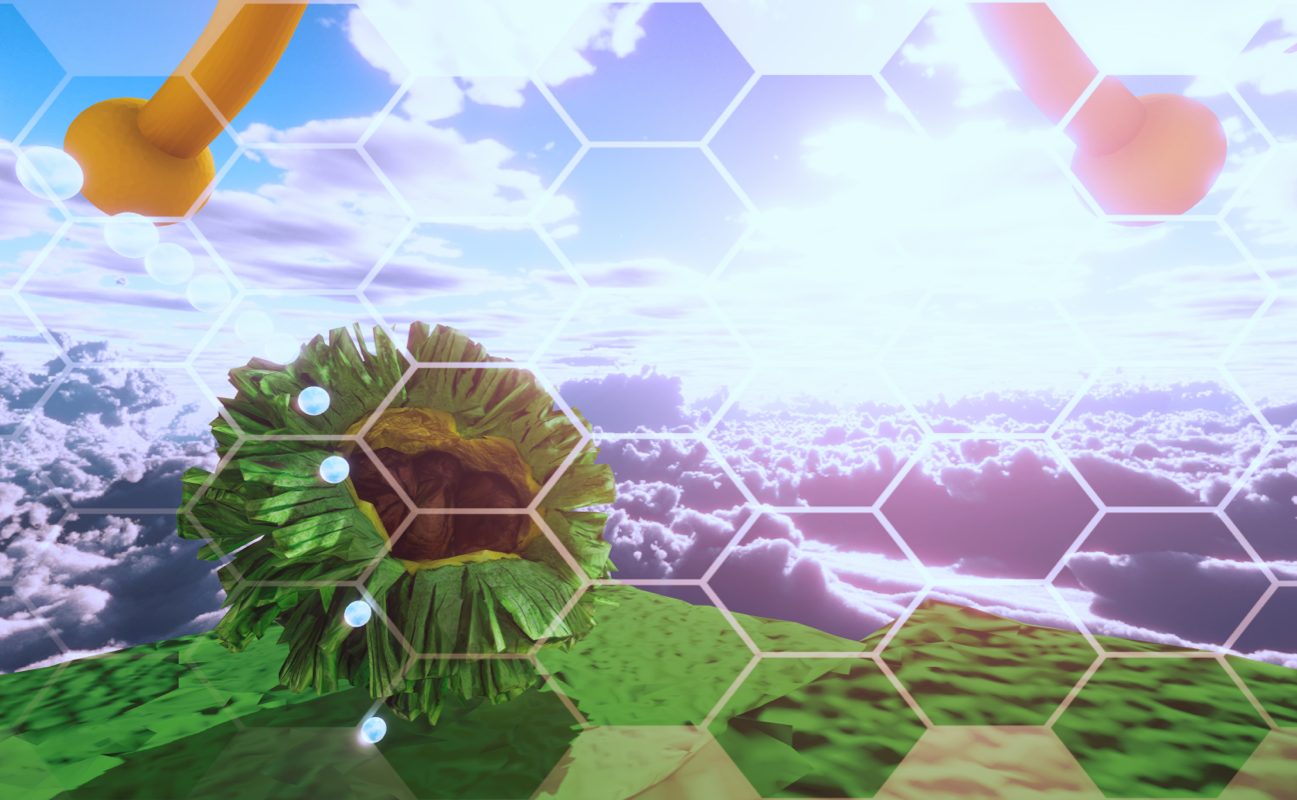
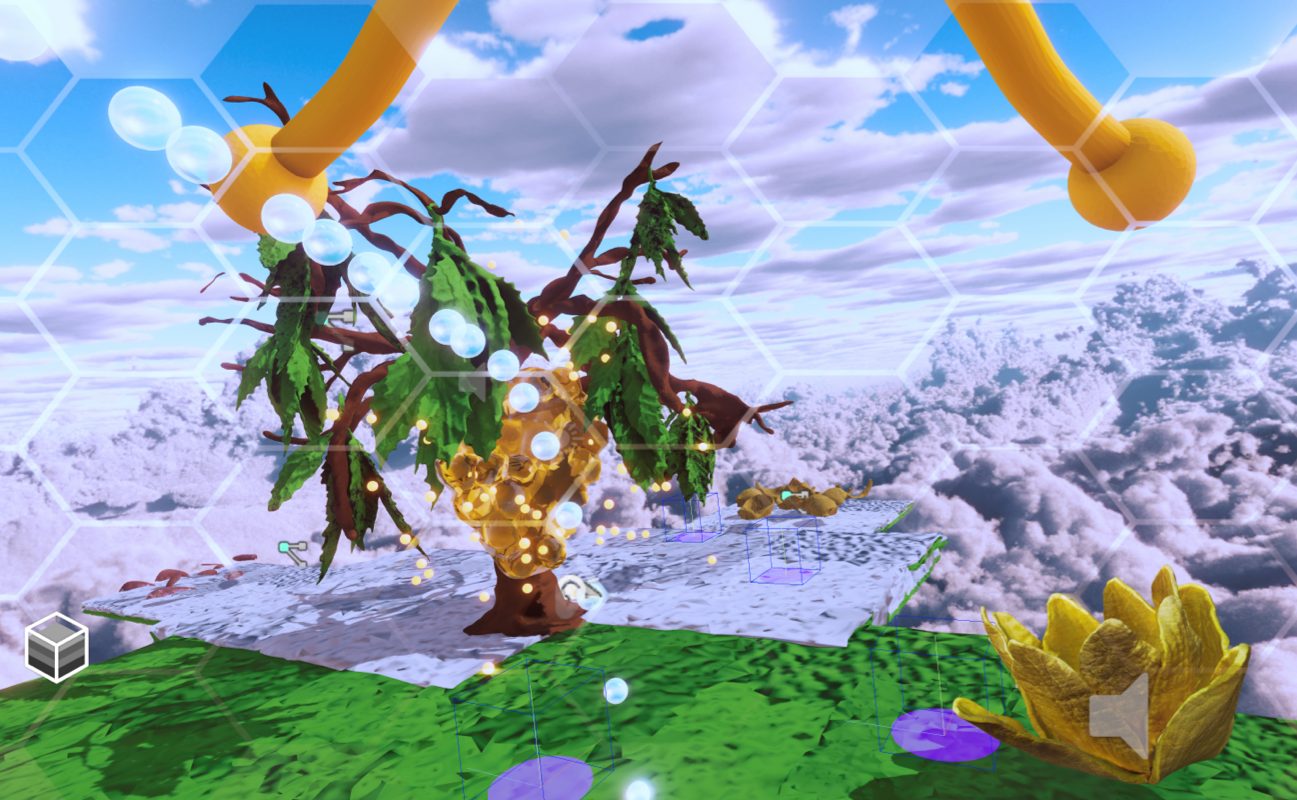
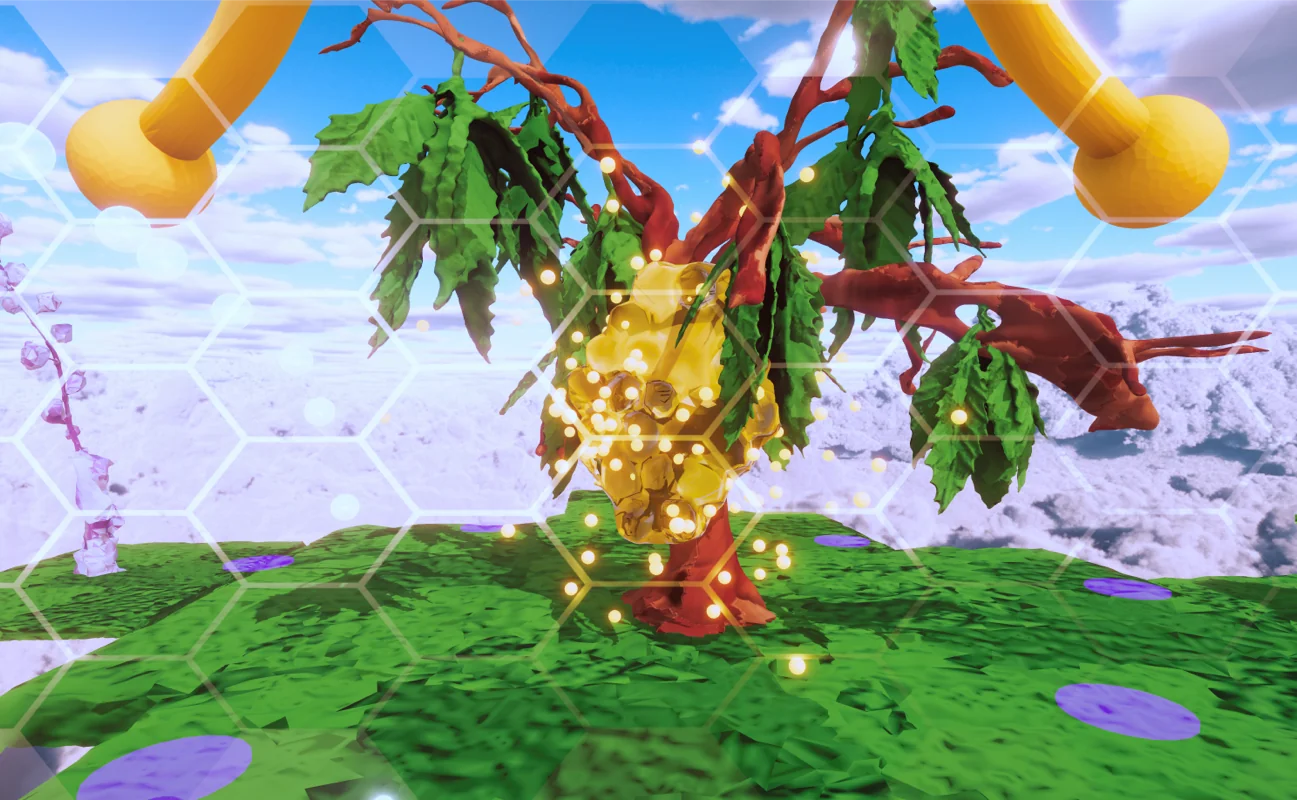
Bees are important pollinators and play a central role in ecosystems. In the design of the game, we chose several endangered plants that are important for bee activity: black cohosh, American chestnut, fringed orchid, underground orchid and blue-sun-star orchid. The honey tree in the centre of the garden symbolises the ecology of the whole garden.
Story
In this game, you are a bee who returns home after a long while and finds everything has died in the garden where your hive resides. You pay your last homage with tears in your eyes. However, as the tears fall to the ground, the remains miraculously regrow into a beautiful flower. You decide to do the same for the rest. Soon the tears of sorrow turn to tears of joy — as each time a plant is reborn, leaves appear on the honey tree again, and your hive revives. Your garden slowly becomes as lush and marvelous as it was before.
Environment
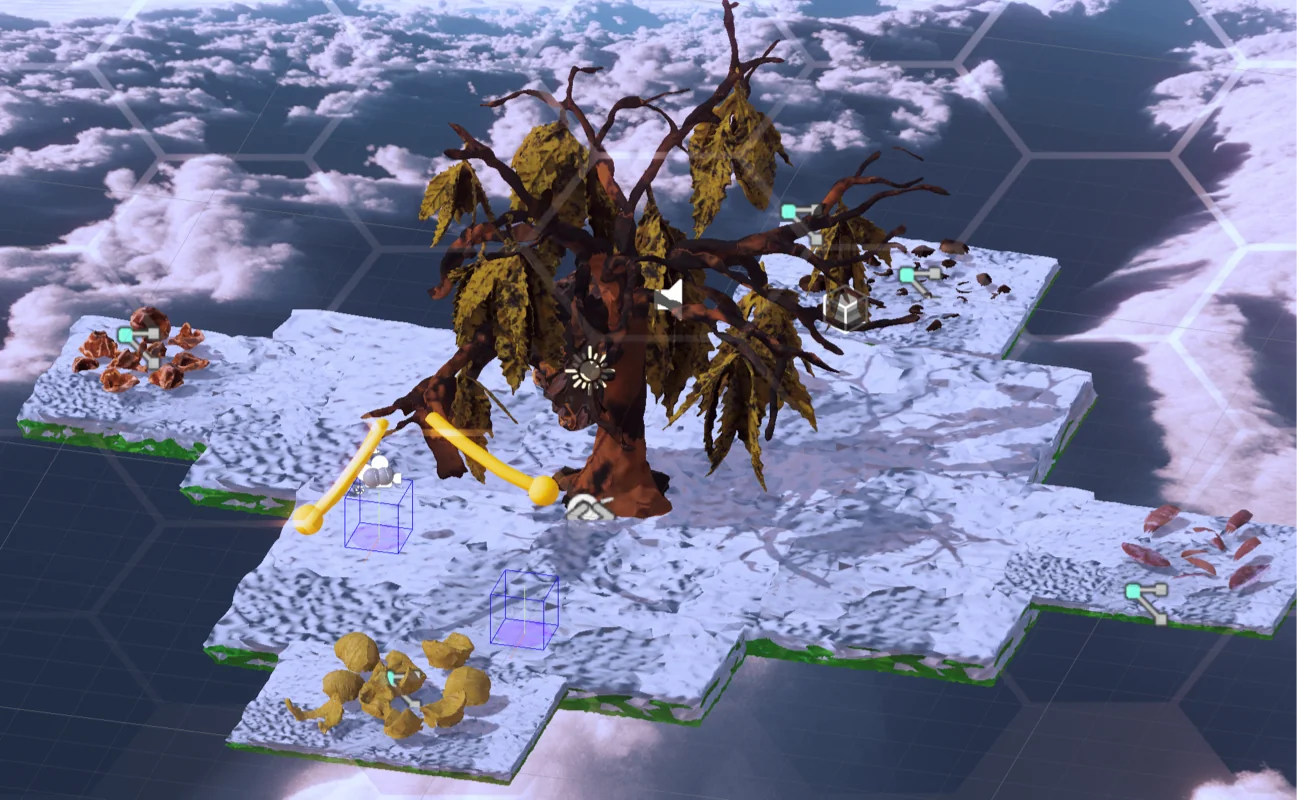
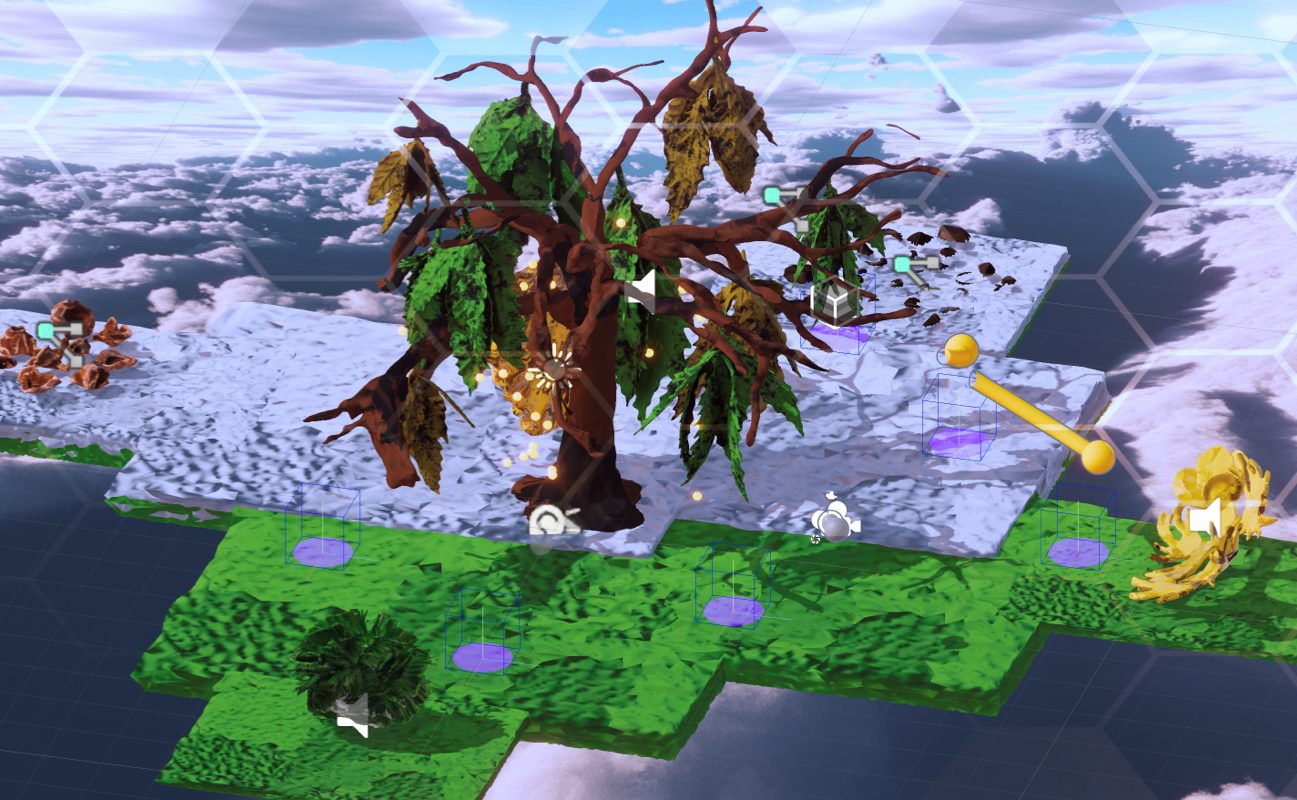
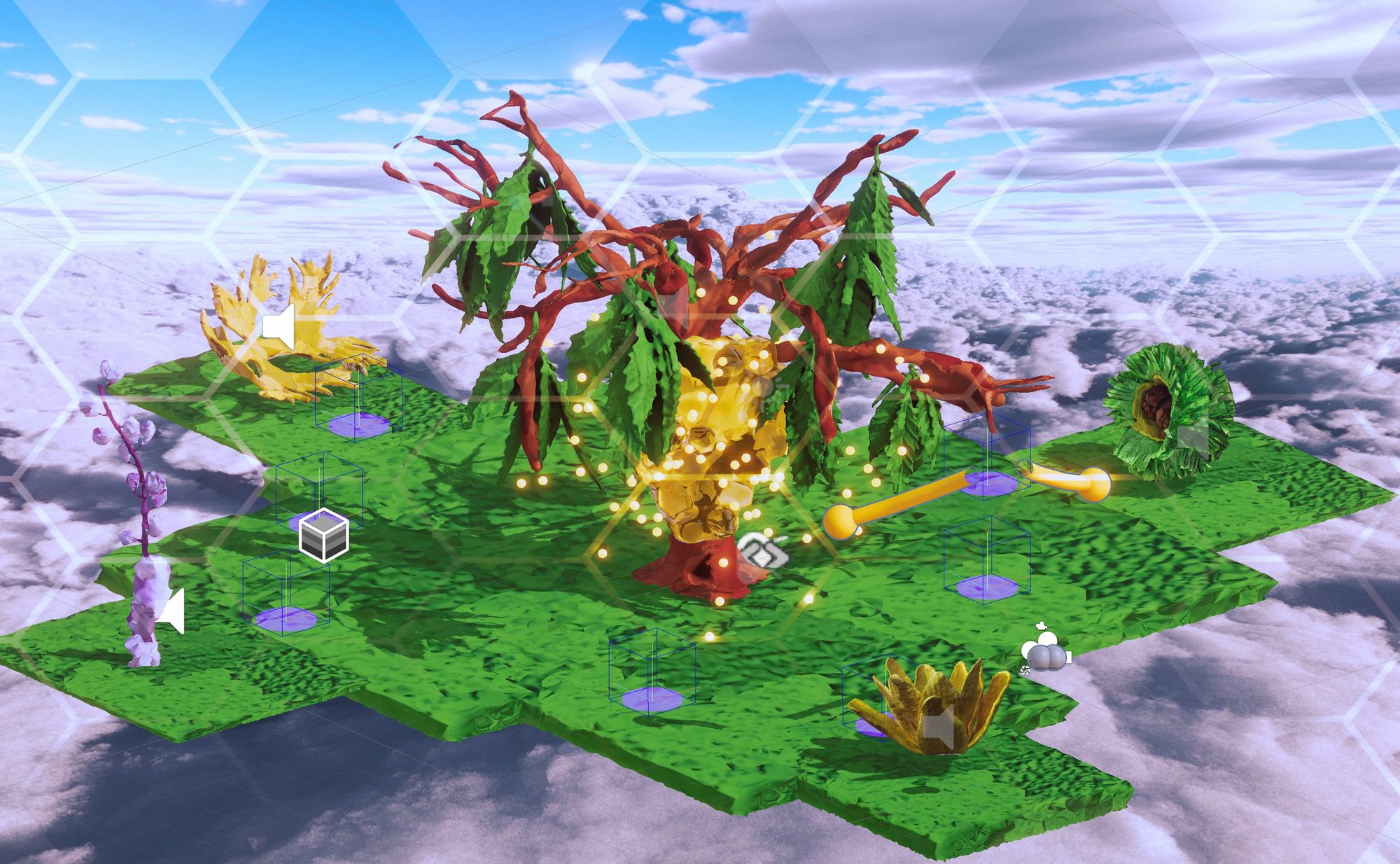
Interaction Flow
Process
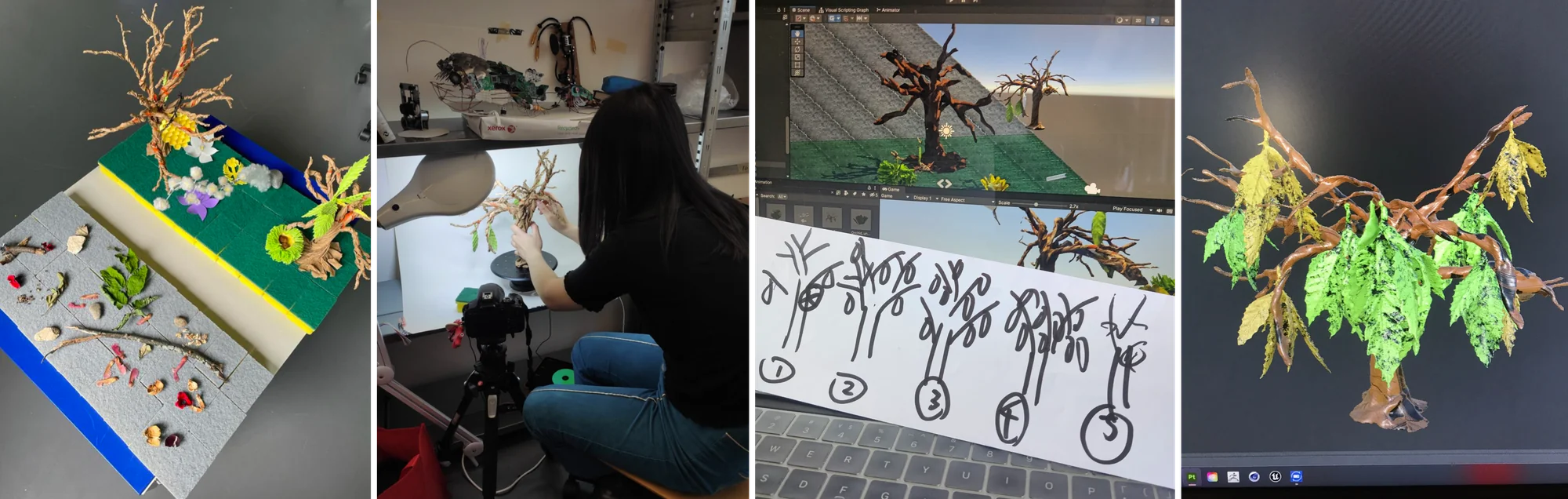
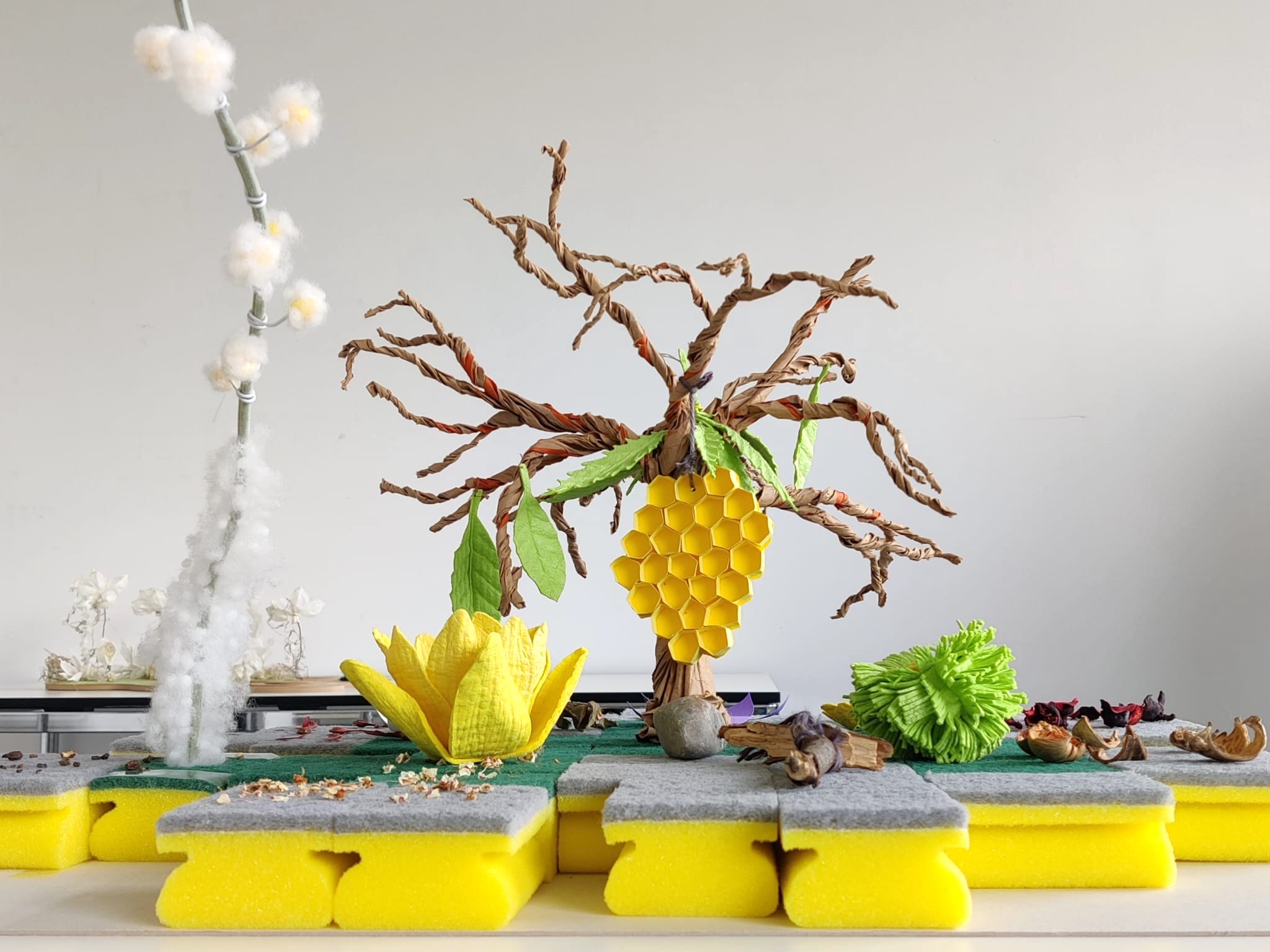
Hand-built and scanned
The main assets in the game were 3D scanned into the computer and then edited to completion. The revived plants and trees were handmade; other items were collected from nature.
Tears as the only verb
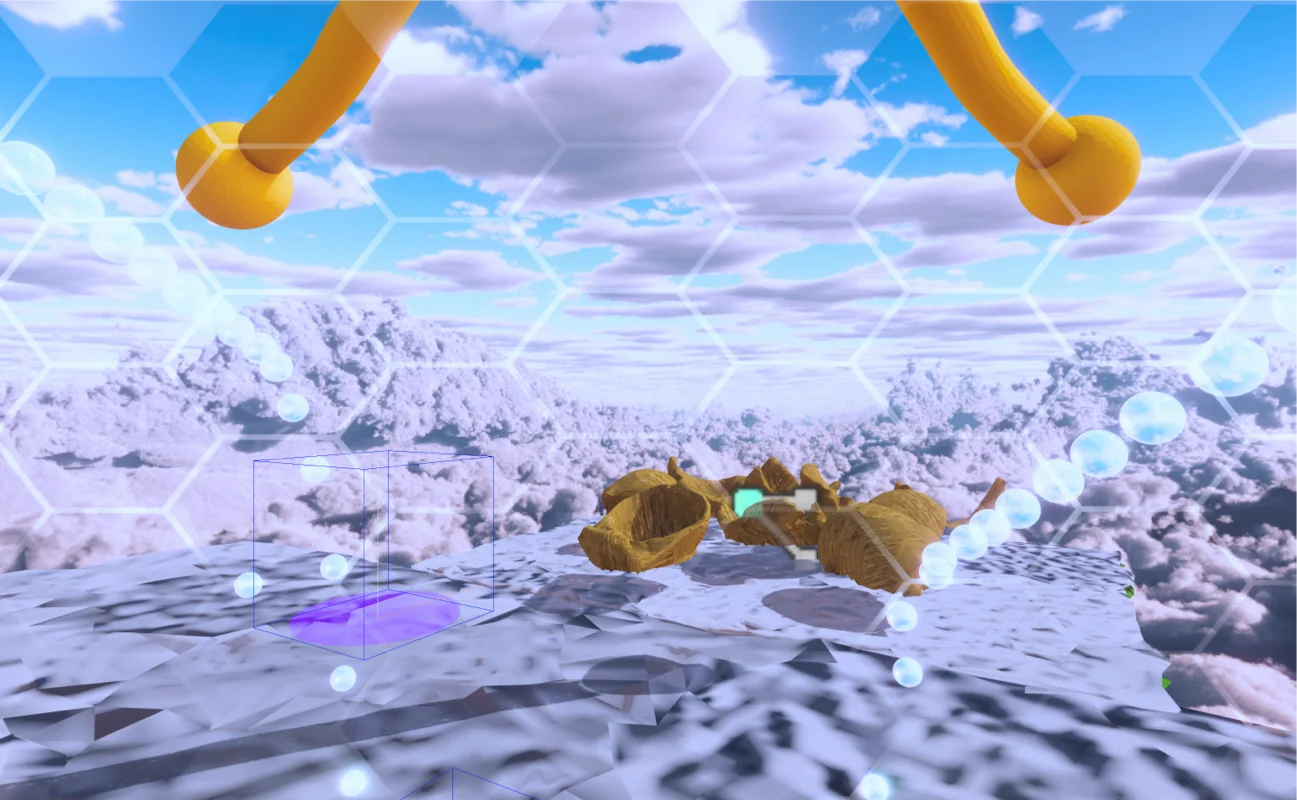
The player uses their tears to water the dead plants. This is the only thing they can do in the game. We chose this because it was the most authentic way to bring the garden back, where the player is asked to stay and sympathise.
Sound as the second character
The course required us to make every sound with our mouths. I recorded and edited all of the audio myself, focusing on the realism of each sound and on the layering of when they appear in the garden.
Bringing it into the headset
The final stage was technical fine-tuning and visual programming in Unity. We worked within the limits of the headset to make the game close to what we designed.
Limitations
The 3D scans from Polycam were not very accurate. Because of the limits of the scanning device and the app, all of the scans had noise and blurred edges, and we could only clean some of it up.
The original files were also too large for the headset to run smoothly, so we used low-resolution versions throughout the game. The final garden in the headset is less detailed than what we built.
For interaction, we could only use one pinch gesture to teleport the player to a plant. More gestures would have given the player more ways to interact with the garden.